











LLM API USE CASES

Find an LLM API for the job you need to ship

Start with a concrete workload, not a generic model ranking. Each guide defines the inputs, workflow, failure cases, and metrics needed to choose a route for that job.

01

Choose a starting point

01
coding

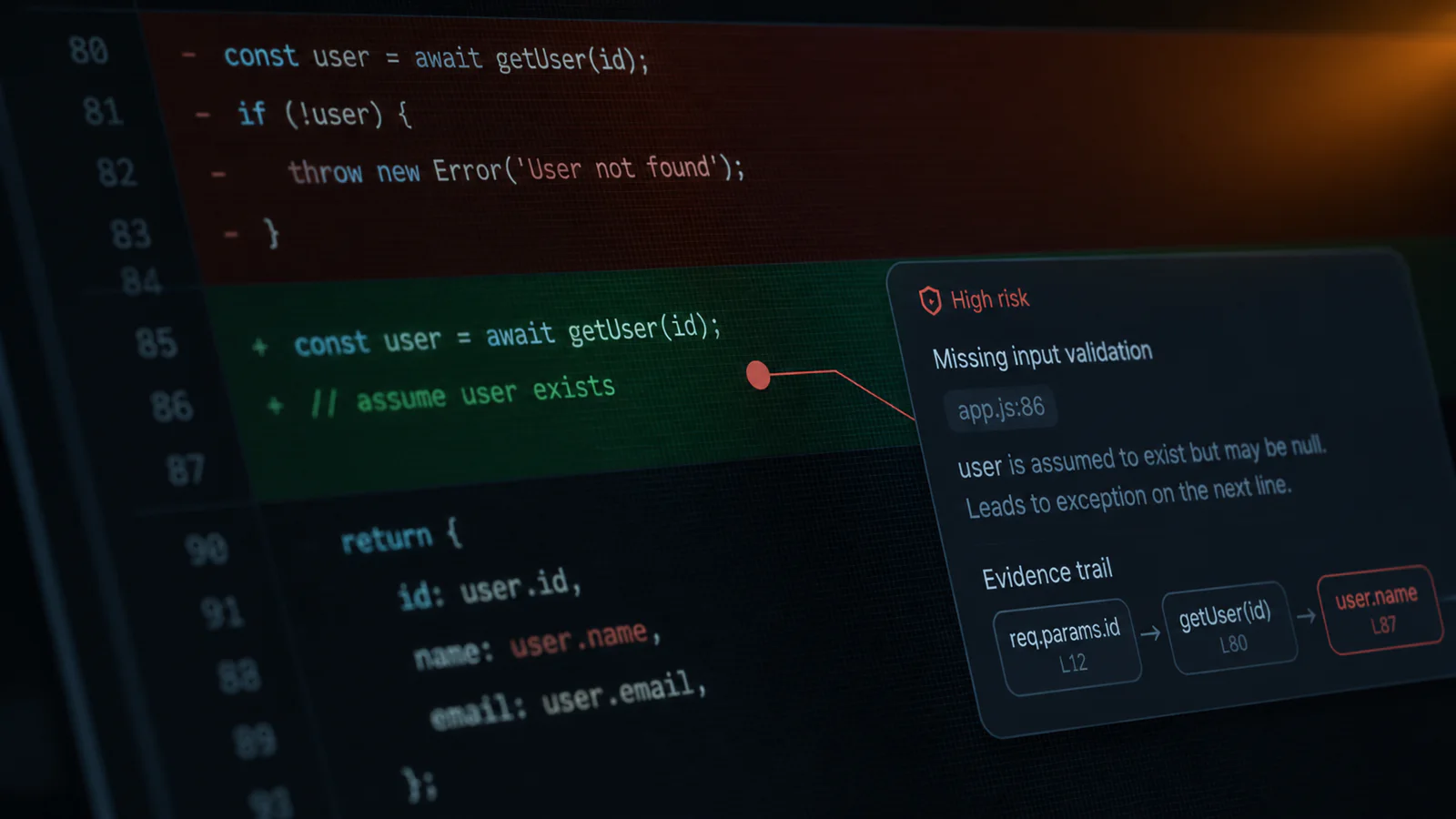
LLM API for code generation

Choose and evaluate an LLM API for generating application code, tests, and small features from written requirements.

02
coding

LLM API for code review

Evaluate LLM APIs for pull-request review, bug detection, security checks, and actionable inline feedback.

03
coding

LLM API for repository refactoring

Plan and validate multi-file refactors that must preserve behavior, public APIs, tests, and architecture boundaries.

04
chatbots

LLM API for customer support chatbots

Design a support chatbot around grounded answers, escalation rules, response time, and cost per resolved conversation.

05
chatbots

LLM API for RAG chatbots

Evaluate generation, retrieval, citations, context limits, and abstention for retrieval-augmented chatbots.

06
chatbots

LLM API for multilingual chatbots

Compare multilingual chatbot APIs on language coverage, intent preservation, locale rules, safety, and latency.

07
agents

LLM API for function calling

Test function-calling APIs for tool selection, argument accuracy, schema compliance, retries, and safe execution.

08
agents

LLM API for browser agents

Evaluate browser agents on page understanding, action selection, recovery, confirmation, and complete-task cost.

09
agents

LLM API for workflow automation

Build reliable multi-step automation with explicit state, bounded retries, idempotency, approvals, and audit logs.

10
reasoning

LLM API for document analysis

Compare LLM APIs for long-document extraction, question answering, comparison, and evidence-linked summaries.

11
reasoning

LLM API for structured data extraction

Evaluate schema-constrained extraction from documents, emails, tickets, and other unstructured text.

12
reasoning

LLM API for math reasoning

Compare math reasoning APIs with answer verification, tool use, consistency checks, latency, and full-solution cost.

How to use this section

Browse four workload families

Coding, chatbots, agents, and reasoning fail in different ways. Open a task guide when you know the workload, or use the family pages to compare adjacent tasks.

  • LLM APIs for coding
  • LLM APIs for chatbots
  • LLM APIs for agents
  • LLM APIs for reasoning

Every page answers one focused search intent

These are not model-name landing pages. They explain how to implement and evaluate code review, RAG, function calling, structured extraction, and other concrete workloads, then connect the decision to current routes and pricing.

Frequently asked questions

What is an LLM API use case?

It is a bounded workload with specific inputs, outputs, failure modes, and pass criteria, such as reviewing a pull request or answering from a private knowledge base.

How should I choose an LLM API for a use case?

Shortlist routes with the required capabilities, then run the same representative tasks and compare pass rate, latency, retries, and cost per completed task.

Can one model handle every use case?

Possibly, but do not assume it. A route that works for chat may not be the most reliable or economical choice for tools, extraction, or repository-scale coding.

Ready to test a shortlist?

Choose one task guide, build its evaluation set, and run the same cases on two current routes.

Browse models